While spring feels like the natural season for renewal, waiting until the cooling days of autumn is the secret to a resilient yard. Discovering the best time to aerate lawn Kentucky properties is the first step toward a healthier landscape. Maintaining a vibrant lawn in Nicholasville frequently feels like a losing battle against stubborn, compacted clay. You've likely watched your grass struggle through the humid summer heat, only to remain thin and patchy despite regular watering.
Understanding our unique transition zone climate is essential for long-term property health. This guide identifies the precise seasonal windows to help you transform your soil and achieve the lush, deep green growth you want for your home. We will explore why fall core aeration is the superior choice for Central Kentucky, how to navigate the challenges of local clay, and the most effective ways to combine aeration with professional overseeding for lasting results.
Understanding Kentucky Soil: Why Aeration is Essential in the Bluegrass
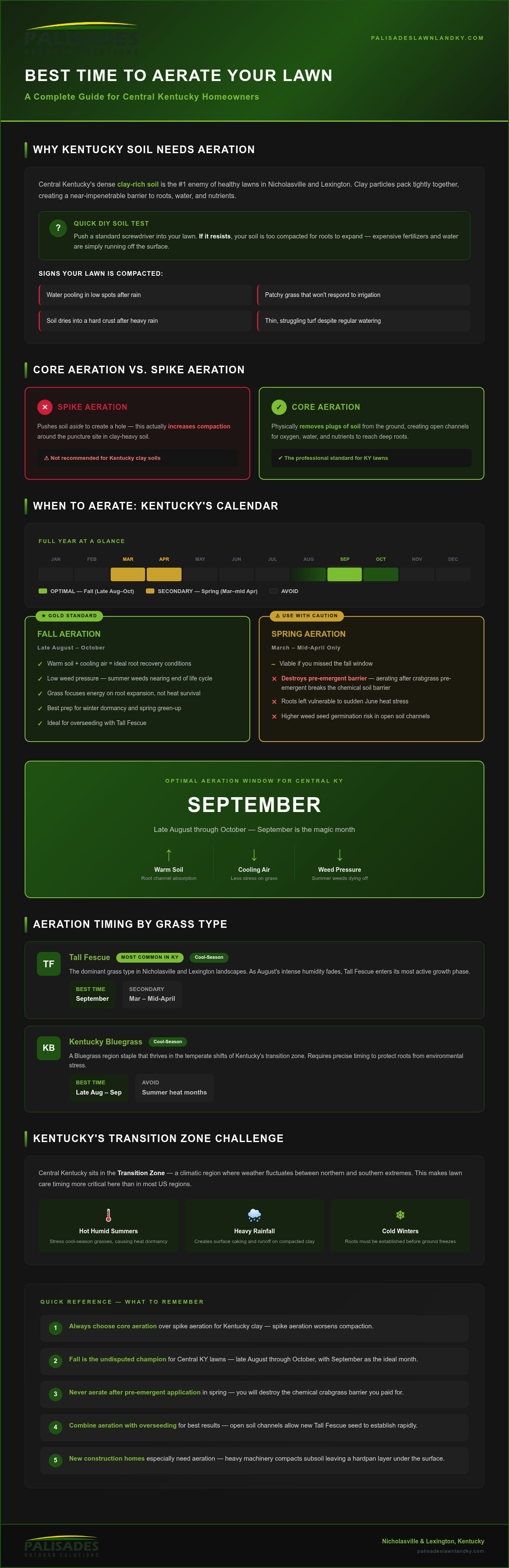
Central Kentucky is famous for its rolling hills and Bluegrass heritage, but for homeowners in Nicholasville and Lexington, the reality beneath the surface is often dense, heavy clay. This mineral-rich soil provides a strong foundation for growth, yet its physical structure presents a unique challenge. Because clay particles are exceptionally small and flat, they pack together tightly over time. This creates a nearly impenetrable barrier that blocks oxygen, water, and essential nutrients from reaching the root zone. Identifying the best time to aerate lawn Kentucky soil is the first step in breaking through this density to restore your yard's health.
Compacted soil essentially suffocates your grass. You can check your own lawn's density with a simple screwdriver test. If you struggle to push a standard screwdriver into the ground, your soil is too tight for roots to expand. This physical resistance limits the effectiveness of your seasonal landscape maintenance, as expensive fertilizers and water simply run off the surface rather than soaking in where they're needed most.
The Compaction Crisis in Central Kentucky
New construction projects in Nicholasville and surrounding areas frequently suffer from severe subsoil compaction. Heavy machinery used during the building process crushes the earth, leaving behind a hardpan layer that prevents drainage. Our local weather patterns add to the problem. Heavy Kentucky rainfall can lead to "caking," where the top layer of soil dries into a hard crust after a storm. If you notice water pooling in low spots or see patchy grass that doesn't respond to irrigation, your lawn is likely struggling with poor air exchange and restricted water absorption.
Core Aeration vs. Spike Aeration
When you're looking for the best time to aerate lawn Kentucky yards, it's vital to choose the right method. Many homeowners consider using spike aerators, but these tools often do more harm than good in heavy clay. Spike aeration works by pushing soil aside to create a hole, which actually increases the density and compaction around the puncture site. In contrast, professional core aeration uses specialized equipment to pull physical plugs of soil and thatch from the ground. Core aeration is the process of removing soil plugs to allow root expansion. This method provides immediate relief from compaction, creating open channels that allow your lawn to breathe and thrive.
The Best Time to Aerate Your Lawn in Kentucky: Fall vs. Spring
Timing is the most critical factor in the success of your lawn care regimen. For homeowners in Central Kentucky, the calendar dictates when the soil is most receptive to treatment. Late August through September represents the optimal window for these services. Identifying the best time to aerate lawn Kentucky properties is driven by our unique position in the Transition Zone; a region where weather patterns fluctuate between northern and southern extremes. Fall provides the necessary stability for grass to recover before the ground freezes.
While many people associate yard work with the arrival of spring, our local climate makes autumn the most forgiving season for soil disruption. Aerating during this period aligns with the natural growth cycle of cool-season grasses like Tall Fescue. Proper timing also ensures that your fertilizer and weed control applications work in harmony with the aeration process rather than against it.
Why Fall is the Gold Standard for KY Lawns
The combination of warm soil and cooling air temperatures in September creates an ideal environment for rapid root recovery. During these weeks, the grass isn't struggling to survive the intense humidity of a Nicholasville summer. Instead, it can focus its energy on expanding into the new space created by core aeration. This root development is essential for preparing the lawn to survive the dormant winter months. Additionally, weed pressure is significantly lower in the fall. Most aggressive summer weeds are reaching the end of their life cycle, which reduces the risk of unwanted seeds taking root in the newly opened soil channels.
The Spring Window: Is it a Viable Second Option?
If you missed the fall window, aerating between March and mid-April is a secondary option. However, spring aeration comes with a significant warning. Most Kentucky homeowners apply pre-emergent weed control in early spring to prevent crabgrass. Aerating after this application will break the chemical barrier in the soil, rendering your weed prevention efforts useless. This often leads to increased crabgrass infestations as the summer progresses. Spring aeration also leaves young, tender roots vulnerable to the sudden onset of June heat. If you're unsure if your lawn can wait until autumn, it's helpful to consult with a professional to evaluate your soil's current health.
Timing Aeration Based on Your Kentucky Grass Type
Success in lawn care depends on understanding the biological needs of your specific turf variety. While we've established the seasonal windows, the best time to aerate lawn Kentucky properties is ultimately dictated by whether you have cool-season or warm-season grass. Most residents in the Bluegrass region maintain lawns composed of Tall Fescue or Kentucky Bluegrass. These varieties thrive in the temperate shifts of our transition zone, yet they require precise timing to ensure the aeration process supports rather than hinders their growth cycles.
Choosing the wrong week for your grass type can leave the root system vulnerable to environmental stress. For a comprehensive look at how these factors interact, you can refer to our guide on Mastering Aeration and Overseeding in Kentucky. Proper identification of your turf is the first step in creating a reliable maintenance schedule that produces professional results.
Cool-Season Grasses (The KY Standard)
Tall Fescue is the most prevalent grass type found in Nicholasville and Lexington landscapes. For this variety, September is the magic month for aeration. As the intense humidity of August fades, Fescue enters a period of vigorous root expansion. Aerating during this window allows the plant to recover quickly and strengthens the lawn before the winter freeze. If your lawn consists primarily of Kentucky Bluegrass, you should aim for the earlier side of the fall window. Bluegrass spreads through underground rhizomes, and it needs ample time to fill the core holes and establish a dense mat before the first frost, which typically arrives in Central Kentucky by mid-October.
Warm-Season Grasses in the Transition Zone
While less common, some Kentucky homeowners utilize Bermuda or Zoysia grass for their exceptional heat tolerance. These varieties follow a completely different schedule. The best time to aerate lawn Kentucky yards with warm-season turf is from late May through June. These grasses are most resilient when the weather is consistently hot and they're in their peak growth phase. Aerating warm-season grass in the fall is a common mistake that can lead to significant winter kill. Because these plants go dormant when temperatures drop, they cannot heal the "wounds" left by aeration, leaving the root zone exposed to freezing air. If you're managing a lawn with a mix of varieties, focus your timing on the dominant grass type to ensure the majority of your yard remains healthy and stable.
Preparing for Aeration: Mowing and Watering Steps
Proper preparation ensures that professional equipment can perform at its peak. Once you have identified the best time to aerate lawn Kentucky based on your grass type, you must set the stage for the machine to penetrate the soil effectively. This process begins with simple adjustments to your routine maintenance. Skipping these steps often results in shallow plugs or missed sections, which limits the long-term restoration of your property.
Achieving the right soil consistency is the most important factor for success. Kentucky clay becomes incredibly hard when dry, which can cause aeration tines to bounce off the surface. Conversely, saturated ground leads to messy ruts and smeared soil pores. The goal is a "moist but not muddy" state that allows for clean extraction of soil cores. This preparation also provides a great opportunity to perform a system check; if you find issues with your coverage, addressing irrigation repair before the aeration date ensures even moisture levels across the yard.
The 48-Hour Prep Checklist
Success requires a methodical approach in the days leading up to the service. Following these steps helps the equipment reach the root zone without interference:
- Mowing: Lower your mower blade to cut the grass down to 1.5 to 2 inches. Shorter grass prevents the aerator from getting tangled and allows the tines to reach the soil surface directly.
- Watering: Apply approximately one inch of water to the lawn 1 to 2 days before the service. This deep soaking softens the clay enough for the machine to pull consistent 3-inch plugs.
- Clearing: Remove all debris, including children's toys, lawn furniture, and fallen branches from recent Kentucky storms. A clear path prevents equipment damage and ensures complete coverage.
Protecting Your Property Infrastructure
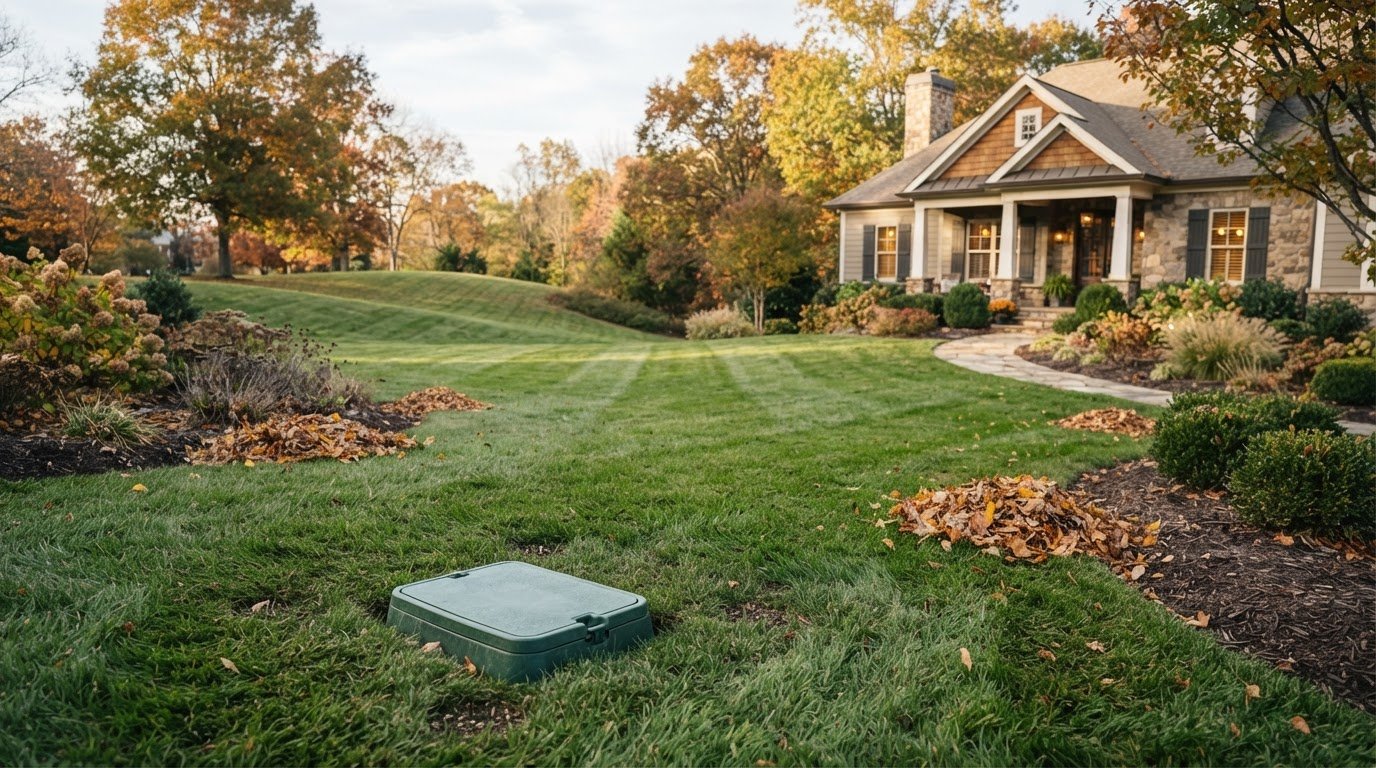
Precision is a hallmark of professional care. Before the aeration begins, you must identify and flag all underground obstacles. This includes sprinkler heads, valve box covers, and invisible dog fences. We also recommend marking shallow utility lines or wires for holiday lighting that may be buried just beneath the thatch. Professional-grade aerators are heavy and powerful; they can easily sever a plastic irrigation line if it isn't clearly marked.
Choosing a professional service helps you avoid the common pitfalls of DIY equipment. Rental machines are often poorly maintained and difficult to maneuver, which can lead to accidental turf damage or incomplete aeration. A seasoned expert understands how to navigate tight corners and slopes without compromising your landscape's infrastructure. If you are ready to schedule your seasonal maintenance, contact our team today to ensure your lawn receives meticulous and dependable care.
Post-Aeration Care: Seeding and Recovery in Central KY
Pulling the final core is only the beginning of your lawn's transformation. To maximize the benefits of this process, you must act quickly while the soil channels remain open and receptive. Because these holes provide direct access to the root zone, the best time to aerate lawn Kentucky properties is when you are prepared to follow up with high-quality seed and nutrients. This integrated approach ensures that your investment leads to a thicker, more resilient yard that can withstand the challenges of the coming year. Acting within the first 48 hours is essential to capitalize on the freshly disturbed soil.
At Palisades Outdoor Solutions, we focus on the total health of your property through meticulous attention to detail and professional-grade equipment. We understand the specific needs of our local soil and climate, providing a dependable partnership for your lawn's recovery. Proper post-care not only speeds up the healing process but also ensures that the new growth is established well before the first hard freeze in Nicholasville.
The Synergy of Aeration and Overseeding
Aeration creates the ideal environment for new growth by significantly increasing seed-to-soil contact. When seeds fall into the aeration pockets, they are protected from drying winds, hungry birds, and heavy rain runoff. This is why our team views aeration and overseeding as a single, unified solution for Central Kentucky landscapes. Selecting a professional-grade Tall Fescue blend ensures your lawn remains consistent in color and texture, even in varying micro-climates. Leaving the soil cores on the lawn returns vital nutrients to the surface. These plugs will naturally break down over one to two weeks, providing a beneficial top-dressing that supports the new seedlings.
Watering for Successful Germination
The first 14 days after seeding require a disciplined approach to irrigation. During this period, the goal is to keep the top layer of soil and the new seeds consistently moist. You should avoid heavy watering that causes puddling; instead, opt for light, frequent applications. Once the new grass reaches a height of roughly two inches, you can begin transitioning back to a deep, infrequent watering schedule. This encourages the young roots to grow deeper into the soil channels created during aeration, building the foundation for a drought-tolerant landscape. If you are ready to achieve a lush, healthy yard, Contact Palisades Outdoor Solutions for professional aeration today!
Securing a Vibrant Landscape for the Seasons Ahead
A healthy lawn is built on a foundation of proactive care and precise timing. By addressing the compaction issues common in Central Kentucky clay, you allow your turf to breathe and expand its root system. Remember that the best time to aerate lawn Kentucky yards is during the cooling days of late August and September. This strategic window allows your grass to recover from summer stress while preparing for the dormant winter months. Utilizing professional core aeration rather than spike methods ensures that nutrients actually reach the soil, providing the stability your property needs to thrive.
Palisades Outdoor Solutions brings local expertise to every project, offering comprehensive lawn care packages that combine professional-grade aeration with overseeding. Our team understands the specific challenges of Nicholasville landscapes and provides the meticulous attention to detail required for deep root growth. Taking these steps now protects the longevity and visual appeal of your home's exterior for years to come.
Schedule Your Professional Fall Aeration with Palisades Outdoor Solutions to ensure your lawn receives the expert care it deserves. We look forward to helping you achieve a thicker, greener landscape that you can take pride in throughout the year.
Frequently Asked Questions
When is the absolute best time to aerate my lawn in Central Kentucky?
The absolute best time to aerate lawn Kentucky properties is between late August and late September. This specific window provides the ideal balance of warm soil and cooling air for cool-season grasses like Tall Fescue. Aerating during this period ensures your lawn has ample time to recover and establish deep roots before the first hard frost. It's the most reliable way to prepare your yard for long-term health and stability.
Can I aerate my Kentucky lawn in the spring instead of the fall?
You can aerate in the spring between March and mid-April, but it's generally considered a secondary option. Spring aeration often leads to increased weed competition as the open soil provides a perfect home for crabgrass seeds. Additionally, young grass roots established in the spring may struggle to survive the intense humidity and heat of a typical Kentucky summer. Fall remains the superior choice for lasting results.
How often should I aerate my lawn if I have heavy clay soil in Nicholasville?
Most Nicholasville lawns with heavy clay soil benefit from professional aeration once per year. If your property has high foot traffic or was recently built on compacted subsoil, an annual schedule is essential to prevent the ground from becoming impenetrable. Consistent yearly treatment allows the soil structure to improve gradually, leading to a much more resilient and vibrant landscape that manages water more effectively.
Is it okay to aerate during a Kentucky summer drought?
Identifying the best time to aerate lawn Kentucky yards means avoiding the peak of summer. Aerating during a drought is not recommended because the soil is often too hard for the equipment to function correctly. When the ground is bone-dry, the aerator cannot pull deep plugs; the process also puts extreme stress on dormant grass. It's better to wait for natural rainfall or consistent irrigation to soften the clay.
Should I mow my lawn before or after aeration?
You should always mow your lawn before the aeration process begins. We recommend lowering your mower blade to a height of 1.5 to 2 inches. Removing the excess leaf growth allows the aerator tines to make direct contact with the soil surface. This ensures the machine pulls consistent three-inch plugs without the interference of long grass or heavy thatch, leading to much better seed-to-soil contact.
What happens if I aerate after applying a pre-emergent weed killer?
Aerating after applying a pre-emergent weed killer will disrupt the protective chemical barrier on the soil surface. This disruption allows weed seeds to germinate in the newly created holes, potentially leading to a significant infestation. If you plan to aerate in the spring, you must either skip the pre-emergent application or wait until the fall window to treat your soil. Proper sequencing is vital for a weed-free yard.
Do I need to rake up the soil plugs left on my lawn after aeration?
You should leave the soil cores on the lawn rather than raking them up. These plugs are filled with beneficial microbes and nutrients that your grass needs to thrive. Over the course of one to two weeks, the cores will naturally break down and filter back into the turf during regular watering. This process acts as a light top-dressing that improves the overall health and structure of your soil.
How soon can I see results after aerating and overseeding my lawn?
You will typically see new grass sprouts within 10 to 21 days after an integrated aeration and overseeding service. While the initial germination happens quickly, the full visual results often take several months to manifest. By the following spring, your lawn will appear significantly thicker and greener as the root systems established during the fall begin their peak growth phase. Patience during the establishment phase leads to better longevity.
Recent Posts